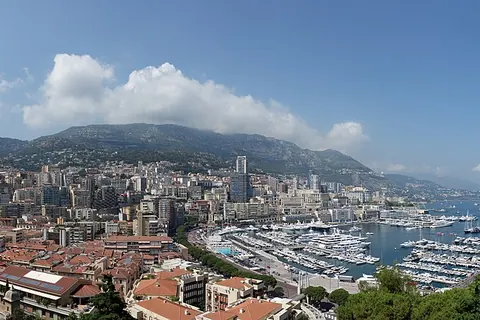

This is Port Hercule, a natural jewel box between the Rock and Monte Carlo. Its name comes from an ancient legend: the hero Hercules is said to have passed this way, and the Greeks and then the Romans called the anchorage Portus Herculis Monoeci. For centuries it was just an open bay exposed to storms. Major works began from 1910 under Albert I and were completed in the 1920s, with jetties that finally enclosed the basin. In 2002 an impressive floating breakwater, built in Spain and towed here, allowed much larger ships to berth. Stroll along the quays: you will see yachts of every size, some over a hundred metres long, flying flags from all over the world. In winter an ice rink is set up by the water; in May the quays turn into the Grand Prix paddock. In summer the Rainier III pool beckons. It is an ideal place to wander at dusk.
History
Long before the yachts, this deep bay tucked between the Rock and Monte Carlo already sheltered sailors. In the 6th century BC, Greeks from Marseille, the Phocaeans, founded a trading post here called Monoikos. The place was linked to the cult of Hercules: according to ancient accounts, the hero passed along this coast while opening the road between Spain and Italy. The Romans kept the tradition, and the name Port of Hercules has come down through the centuries.
For a very long time, however, the anchorage remained exposed to the wind. It was in the early 20th century, under Prince Albert I, that the jetties gradually closing the basin were built. The modern port was completed in 1926. But the east wind still blew in, and in the 1970s Prince Rainier III launched an ambitious project to enlarge it and protect it better.
Art and architecture
The project came to fruition in 2002 with a feat of engineering: a semi floating breakwater 352 metres long, weighing about 160,000 tonnes. It was built in Algeciras, Spain, at the foot of the Rock of Gibraltar, then towed across the Mediterranean and anchored here. A 145 metre counter jetty completes the protection. Thanks to them, the outer basin can welcome cruise ships and very large yachts.
Today the port covers about 16 hectares and offers some 700 berths. Its quays are home to the Yacht Club de Monaco, the Automobile Club de Monaco and the Rainier III swimming stadium, the open air pool you can see by the water.
Anecdotes
The port lives to the rhythm of major events. Every year, part of the Formula 1 Grand Prix circuit runs along its quays, with cars racing between the pool and the yachts. In 2009, the Tour de France started here. On 1 July 2011, Jean-Michel Jarre gave a huge concert on the port for the wedding of Prince Albert II and Charlene Wittstock, in front of nearly 100,000 people.
Every autumn, the Monaco Yacht Show turns the quays into a showcase for large yachts. And the Latin poet Virgil already mentioned, in the Aeneid, the citadel of Monoecus overlooking the sea: the Rock you see above the basin.
What to look for
Stroll along the quays to admire the hulls and the flags from all over the world. Look up at the Rock and the Palace, then turn towards the buildings of Monte Carlo: the port links the two. Out at sea, spot the long grey breakwater: it made the journey from Spain. At sunset, the reflections on the water and the lights of the Rock offer one of the finest moments of the walk.
Practical
The quays are freely accessible and flat, making for an easy walk, even with a pushchair. From the Place d’Armes, simply head down towards the sea. During the Grand Prix and major shows, parts of the quays are closed or require a ticket: check in advance on the official visitmonaco.com website. The Rainier III swimming stadium usually opens in the warm season.
Nearby
Close by, climb up to the Rock via the Rampe Major, or continue to the Prince’s car collection, located on the port since 2022. The Condamine Market and the Church of Saint Devota are also very near. The principality also has the port of Fontvieille, built in 1973, and the port of Cala del Forte in Ventimiglia, opened in 2020.
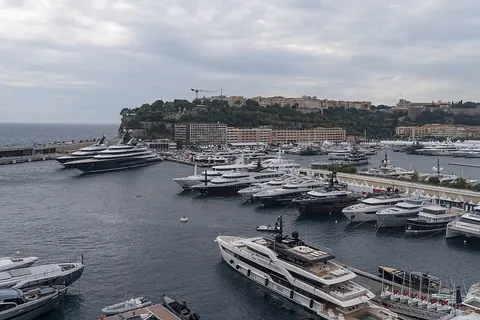

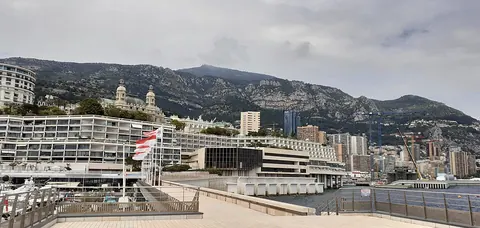

On site, look for: Find a yacht flying a non European flag.
Test yourself
Which hero gave the port its name?
- Achilles
- Hercules (answer)
- Ulysses
What appears here in winter?
- A circus
- A giant Christmas market
- An ice rink (answer)
When did major works begin?
- 1700
- 1901 (answer)
- 1990
Sources
Information checked on 30 September 2026.